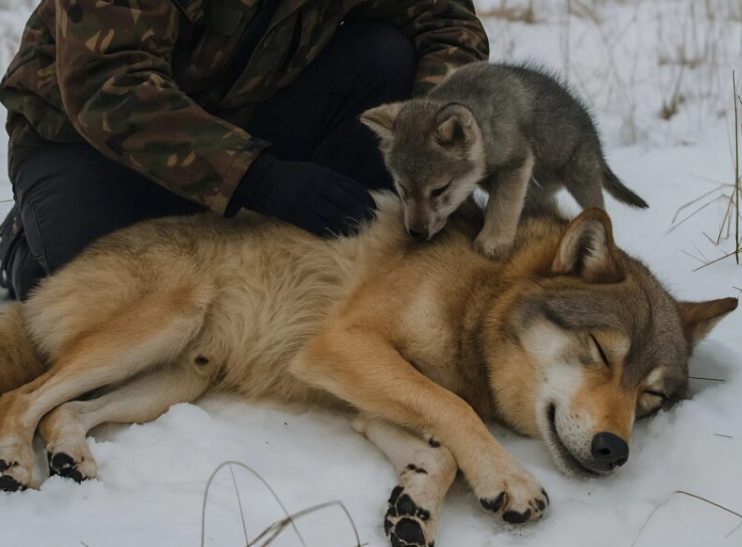
“A man rescued an injured wolf and its cub, unaware of what would happen the next day: the entire village was horrified by the scene.
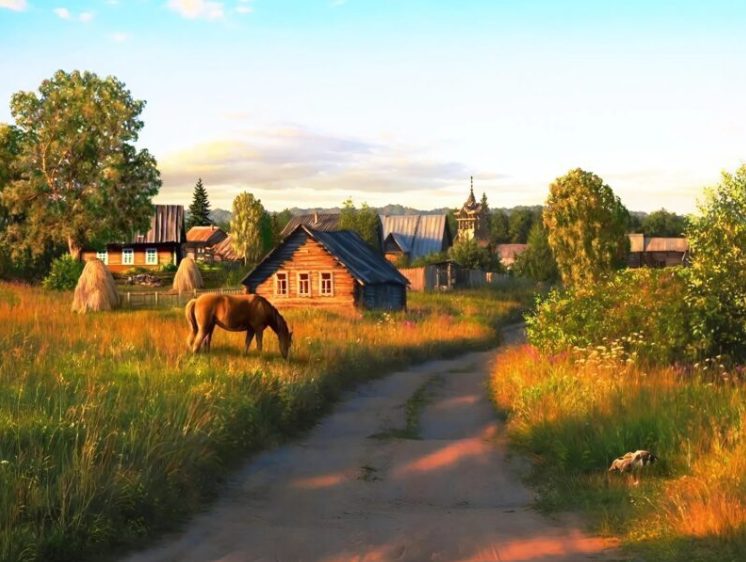
That winter was very cold. Snow covered the roads up to waist height, and at night howling could be heard. The villagers tried not to go toward the forest unless absolutely necessary. It was dangerous there: you could get stuck in the snow, freeze, lose your way, or — if you were even less lucky — accidentally stumble onto a wolf trail.
But sometimes there was no choice. When the pipes froze and water stopped reaching the houses, one of the men had to go into the forest and clear the old underground pipe. And that day was no different. A man, accustomed to hard winter work, threw a heavy backpack with tools over his shoulders and set off toward the forest. The frost burned his face, the snow creaked under his feet, but he walked confidently.
Halfway there, on a wide snow-covered field, he noticed a dark spot. At first he thought it was an abandoned sheep or a sack. But the closer he got, the clearer it became that it was a wolf.
He was about to step back, turn around, and run, but then he noticed that the wolf wasn’t moving. Only nearby, whimpering pitifully, ran a tiny wolf cub — rubbing its muzzle against its mother’s side, trying to lick her.
The man listened. The wolf was breathing heavily, in ragged gasps. Apparently, the animal had gotten caught in a trap. It was frightening, of course. Anyone understands: a wounded predator is unpredictable. But his conscience tormented him. Walk past? Leave them to die? Even if they are wolves… it just wasn’t right.
He took off his backpack, slowly lowered himself to his knees, trying not to make any sudden movements. The man examined the wound. The beast was alive.
He took out a knife, cut the tangled wire that the wolf had apparently gotten caught on, treated the wound with alcohol, and covered the animal with his old jacket to keep it warm.
When the she-wolf opened her eyes, the man carefully stood up and, without waiting for gratitude, hurried toward the forest without looking back. After all, a wild animal remains wild. He had done a good deed — and that was enough.
He thought that was the end of the story, but the next day the entire village was horrified by what they saw in the morning. (Continuation in the first comment.)
People ran out into the street, some crying, some nervously crossing themselves. The man steps outside — and sees: wolf tracks all along the street, cages broken, only about five chickens left out of twenty. Blood, feathers, and mud on the snow. Around the houses — tracks of an entire pack.
It turned out that the wolves had come to the village at night. Not by chance. They followed a scent. And that scent was human — the very one that had remained on the wounded she-wolf that the man had saved the day before. The pack had found her, caught the scent of a human — and headed straight for the village.
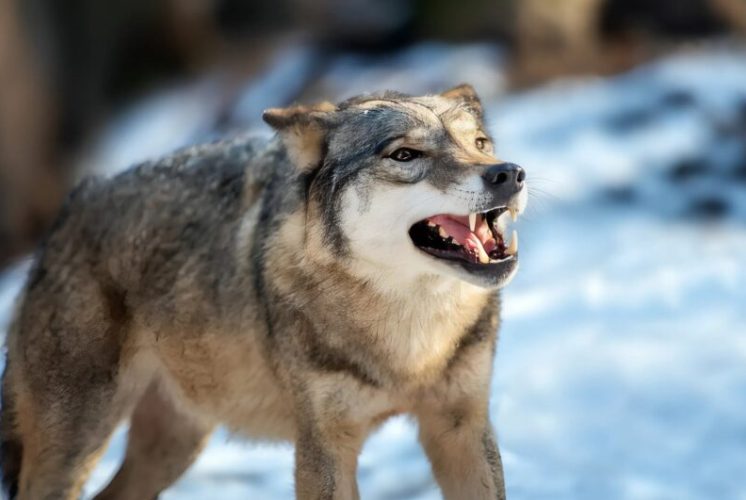
They prowled all night, howling under the windows, trying to break into the barn, scaring the villagers half to death. One man was nearly dragged by the arm when he went out to check on the dogs.
So the people had to take guns and torches and drive the wolves back into the forest. Some of the animals were shot, otherwise they wouldn’t have calmed down.
And that’s how it goes — you do good, and in return…”


