The first thing I noticed about Greenfield Academy wasn’t the size of the building, nor the polished floors, nor the posters hanging proudly in the hallway. It was the noise. For most students, it was just a normal school morning, but for me, every locker door, every laugh, every squeak of sneakers blended into a heavy wave that made my hearing aids buzz behind my ears.
My name is Nora Bell, and I was sixteen when my mother and I moved to Millstone, a small town where everyone seemed to know everyone before they’d even spoken. I was born with severe hearing loss, so my hearing aids weren’t just small devices to me. They were my bridge to voices, alarms, music, and the little sounds people forget to be grateful for.

That morning was my first day at a new school. My mother, Clara, had accepted a new job in the district, but she asked me not to tell anyone yet. “Let people show you who they are before they know who you are,” she signed across the breakfast table. I smiled, although I didn’t fully understand why her eyes looked so serious.
By lunchtime, I had already learned one thing: popularity had a sound. It sounded like confident laughter, expensive bracelets clinking together, and people moving out of the way before you even asked them to. Two girls dominated the hallway as if they owned every tile. Their names were Ava and Sienna Cole, daughters of a well-known school board member. Everyone watched them, imitated them, and stayed out of their way.
I tried to stay invisible. I let my hair fall over my hearing aids, held my books close to my chest, and followed the signs toward the bathroom near the music wing. It was quieter there—or at least I thought it was. I just wanted a minute to breathe, adjust the volume on my hearing aids, and calm the nervous beating in my chest.
Inside, the water from the tap was running. Some girls were by the mirrors, touching up their lip gloss and laughing at something on a phone. I went to the farthest sink, set my books on the counter, and gently touched the small device behind my right ear. The room echoed, and the running water made the sound sharp and uneven.
I didn’t notice Ava and Sienna had come in behind me until I saw their reflections in the mirror. Ava tilted her head, watching my hand near my ear. Sienna smiled that kind of smile that tightens your stomach before anyone even says a word. “What’s that?” Ava asked, pointing at my hair.
I swallowed hard and turned slightly so I could read her lips. “It’s my hearing aid,” I said quietly. “It helps me hear better.” I hoped that would be enough. Usually, when people understood, they either became nicer or at least left me alone. Ava and Sienna did neither.
Sienna stepped closer and said, “So, without it, you really can’t hear?” The other girls by the mirror went silent. I could feel their eyes on me. I tried to move past them, but Ava gently blocked my way with her shoulder, still smiling as if it were all harmless fun.
“Please,” I said, keeping my voice calm. “I have to get to class.” My hand went automatically to my ear, protecting the device. That small movement seemed to interest them even more. Sienna reached out too fast for me to stop her and pulled one hearing aid from behind my ear.
The world on one side went soft and distant. I reached for it, my heart pounding. “Please give it back,” I said. “It’s important.” Ava laughed and pulled the other one from my left ear before I could turn. Suddenly, the whole room disappeared into a thick, frightening silence.
I could see mouths moving, but I couldn’t hear the words. I saw the tap running, the water glinting silver under the lights. Sienna held both hearing aids between two fingers, dangling them over the sink as if they were nothing but cheap toys. I shook my head quickly and reached out.
Ava turned the tap on fuller. The water rushed harder, swirling toward the drain. Sienna opened her fingers. Both hearing aids dropped into the sink with a small splash I couldn’t hear. I lunged forward, but the water carried them straight down the drain before my hands could catch them.
For a second, I forgot how to breathe. My hands searched the wet sink, but they were gone. The devices that helped me understand teachers, cross streets safely, and hear my mother say my name had disappeared under running water, while several girls stood around me in a silence I couldn’t comprehend.
I don’t know what Ava said next. I only saw her lips move and her shoulders shrug as if she were pretending it had been an accident. Sienna looked at the other girls, waiting for someone to laugh. A few looked uncomfortable. One looked down at her shoes. No one stepped forward.
I stepped back from the sink, shaking. My world had become small and closed off, as if I were behind thick glass. I could feel my own crying in my chest, but I couldn’t hear it. I pressed both hands against my ears, though there was nothing left to protect.
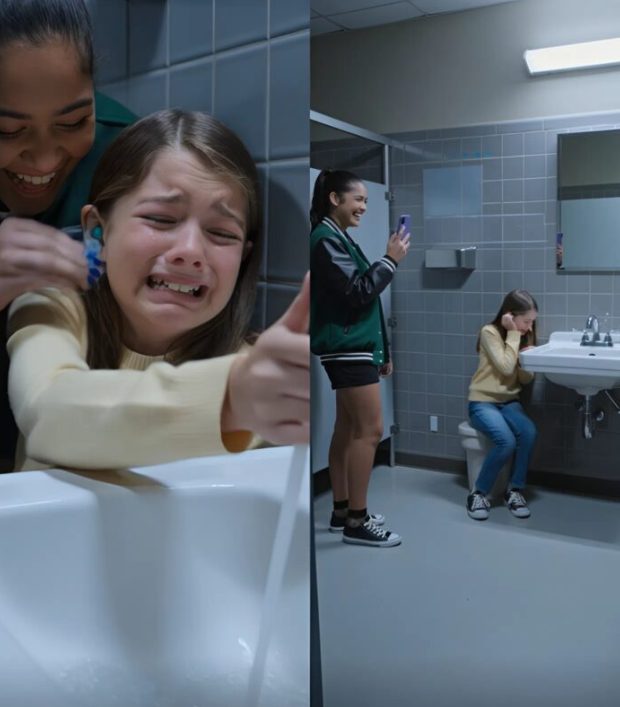
Then the bathroom door opened. I didn’t hear it, but I felt the air change and saw every face turn. A woman in a dark blue suit stood in the doorway. Her expression was calm at first, then changed the moment she saw me, the running water, and Ava holding one of my books as if she’d been interrupted mid-game.
It was my mother. But to everyone else, she was still just a stranger.
She had been walking down the hall on her first quiet inspection when she heard raised voices near the bathroom. She stepped in slowly, her eyes moving from the girls to me. Then she signed with quick, firm hands: Nora, are you safe?
I crumbled. I ran to her and clutched her jacket with both hands. I couldn’t hear myself explain, so I signed through tears. They took them. The water took them. I can’t hear. Mom, I can’t hear. Her face stayed composed, but her hands trembled as she brushed my wet hair from my face.
She turned to the girls and spoke clearly, making sure I could read her lips too. “Everyone in this room comes with me right now.” Ava crossed her arms and rolled her eyes, clearly still believing she could talk her way out of it. Sienna looked less confident, but she followed when my mother opened the door.
The walk to the main office felt endless. Students in the hallway stared as we passed: me clinging to my mother’s sleeve, Ava and Sienna whispering behind us, the other girls walking with their heads down. My mother didn’t raise her voice. She didn’t need to. Her silence carried more authority than any shout.
Inside her office, the secretary stood up quickly. “Dr. Bell, is everything all right?” she asked. Ava’s face changed. Sienna’s mouth fell slightly open. The name on the office door was new, but clear: Dr. Clara Bell, Principal. The girls looked from the plaque to my mother, and then to me.
My mother closed the door carefully. “Before we discuss consequences,” she said, “there’s something you need to know. The student you humiliated today is my daughter.” The room went still. Ava’s confident expression was the first to disappear. Sienna sat down slowly, suddenly looking much younger than she had in the bathroom.
My mother called their parents to the school. She also called the school psychologist, the district support coordinator, and the maintenance team to check the sink. She explained that what happened was not a joke, not a misunderstanding, and not something that could be swept under polite words. It was a serious choice that had stripped a student of her ability to participate in her day safely.
When Ava’s father arrived, he tried to speak quickly about reputation and mistakes. My mother listened, then placed a written report on the desk. “Your daughters will be withdrawn from Greenfield Academy,” she said. “They will continue their education elsewhere, but they will not remain in a place where another student was made to feel unsafe.”
Ava started crying then. Sienna whispered, “We didn’t know she was your daughter.” My mother looked at them for a long moment. “That is exactly the problem,” she said. “You shouldn’t need to know who someone belongs to before you treat that person with respect.” Those words stayed with me longer than anything else that day.
I went home early, wrapped in a silence that had once again become too heavy. But that night, my mother sat beside me and placed her phone on the table. She had already arranged for emergency replacements. More than that, she had scheduled a school assembly for the following week about kindness, accessibility, and the courage to speak up when someone is being treated unfairly.
Three days later, new hearing aids were placed behind my ears. When they turned them on, the first sound I heard was my mother whispering, “Welcome back, my brave girl.” I cried because the world had returned, but also because something inside me had changed. I no longer wanted to disappear in the hallways. I wanted to be seen without fear.
The turning point came at the assembly. I thought my mother would speak for me, but instead she invited me onto the stage. My hands trembled as I stood in front of hundreds of students. Then I saw one of the girls from the bathroom—the one who had looked at her shoes. She stood up and signed two words she had learned overnight: I’m sorry.
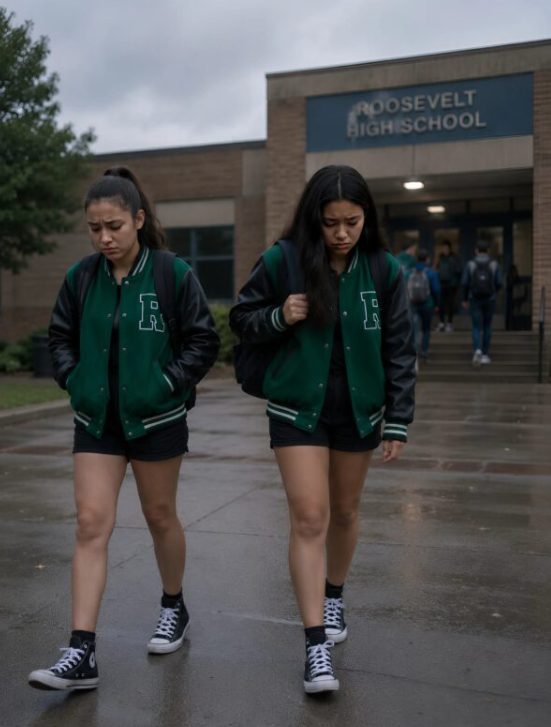
By the end of that week, a new club had started at Greenfield Academy, led by students who wanted to learn the basics of sign language. The girl who had once stayed silent became the first volunteer. And whenever I passed by that bathroom sink, I no longer thought only about what the water had taken from me. I thought about what the truth had given back: my voice, my confidence, and a school that had finally learned to listen.