A little girl kept kicking the back of my seat throughout the entire flight, while her mother just sat on her phone—even after I asked her to calm the child down. But soon my patience ran out, and I came up with a way to put both the rude mother and her daughter in their place.
The international flight was supposed to last almost six hours.
When I boarded the plane, I was in a great mood. I had specifically chosen a window seat, brought a book, downloaded several movies, and hoped to spend the entire flight peacefully.

The passengers around me seemed ordinary. Nothing suggested there would be any problems.
Behind me sat a young woman with a little girl, about seven or eight years old. At first, I even thought I was lucky—the child looked calm and quiet.
The first hour of the flight went completely normally.
The girl watched cartoons on her tablet, her mother scrolled through her phone, and I read my book while enjoying the clouds outside the window.
But then things slowly started to change.
First, the girl turned the volume of her cartoons almost to maximum. Loud songs, character screams, and sharp sounds kept coming from her tablet. Several passengers began to turn around, but the mother paid no attention.
Then the child got tired of the screen.
She opened a bag of snacks and started eating so loudly that people several rows away could hear it. She also kept talking to herself and shouting things at her mother.
I tried to ignore it.
After all, children can be different, and the flight was long.
But then came the worst part.
At some point, I felt a light kick on the back of my seat.
At first, I thought it was an accident. A few minutes later, it happened again. Then again.
And then the girl started kicking my seat regularly.
Bang.
A few seconds later—again.
Bang.
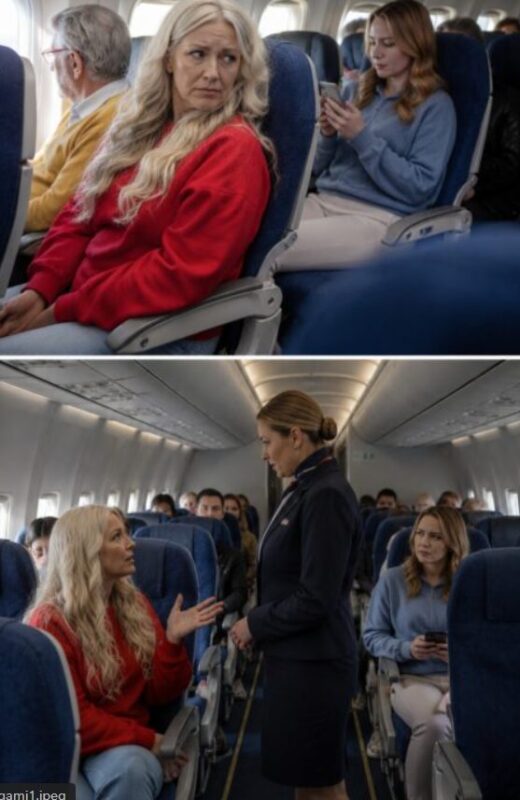
Then even harder. Each hit made my seat noticeably shake.
After the first kick I was surprised. After the third I became irritated. After the fifth I realized I couldn’t tolerate it anymore.
I turned around and said as calmly as possible:
“Please explain to your daughter that she is disturbing other passengers.”
The woman didn’t even immediately look up from her phone.
She looked at me as if I had interrupted something very important.
“She’s just a child,” she replied. “Be patient. She’s just playing.”
“But she keeps kicking my seat.”
“Nothing serious. She’ll get tired soon and stop.”
“She’s disturbing my rest.”
“We’re only flying for a few hours. Don’t make a problem out of it.”
After that, the woman went back to her phone.
She didn’t even look at her daughter.
She didn’t tell her to stop.
And the girl, noticing the conversation, just smirked and a few seconds later kicked the seat again. Then again. And again.
At that moment, I realized the problem wasn’t the child.
The problem was the mother.
The girl was simply doing what she was allowed to do.
I sat in silence for a few minutes, thinking about what to do next. I didn’t want a scene or an argument in the middle of the plane, but I also wasn’t going to leave it like this.
And then I came up with an idea of how to put the rude mother and child in their place.
I called the flight attendant.
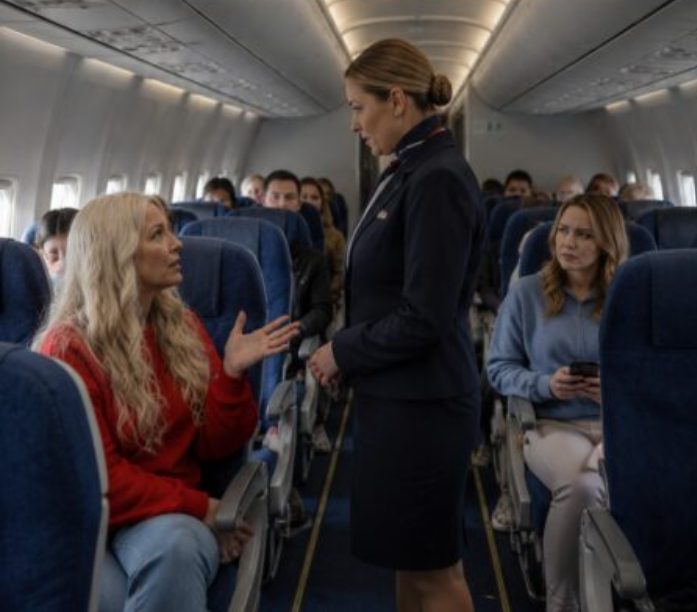
When the attendant arrived, I calmly explained the situation—no shouting, no emotions. Just said that for over an hour I had been unable to sit peacefully because of constant kicks to my seat.
The flight attendant listened carefully and went to speak with the woman.
At first, the mother tried to brush it off the same way she had brushed me off.
She repeated:
“She’s a child.”
But the flight attendant was much more firm.
She explained that passengers must follow onboard rules and not disturb others.
After that, the girl calmed down for about five minutes.
And then it started again.
Only this time, the kicks were even stronger—almost as if on purpose.
The flight attendant noticed it herself.
She came again, observed the situation for a while, and then offered a solution.
There were several free seats in another row of the plane.
And ten minutes later, it wasn’t me who was moved—it was the mother and daughter.
They were moved to the very back of the cabin, where other families with children were seated.
When the woman heard the decision, her face changed immediately. She started protesting, saying it was inconvenient, that she had chosen those seats on purpose, and that her daughter wasn’t bothering anyone.
But the flight attendant calmly replied:
“If the child cannot follow the rules, then we need to move you somewhere where it won’t disturb other passengers.”
There was no point arguing further.
A few minutes later, they packed their things and moved to the back of the plane.
Finally, silence filled the cabin.
I opened my book again and, for the first time in hours, was able to relax.
Later, an elderly man from the neighboring row leaned toward me and quietly said:
“Thank you for not staying silent. She was bothering more than just you.”
I smiled and realized one simple thing:
Sometimes people think others are obliged to tolerate their bad behavior. But as soon as someone calmly and politely sets boundaries, the situation changes very quickly.